Twitch
 Followers
 YouTube
 Likes
 Subscribers
 Kick
 Followers
Twitch Marketing for Businesses: 5 Strategies That Work in 2026
A practical guide to marketing your business on Twitch in 2026: who the audience is, the 5 main strategies, what ads cost and how to measure results.
 Drew Caldwell

On this page
Very few marketing departments have successfully understood Twitch yet. And it is precisely for this reason that it is an excellent opportunity.
While other businesses struggle to capture viewers’ attention with Instagram and YouTube placements, Twitch stands out because of its engaged viewership. Twitch users spend about 95 minutes a day on the platform, more than on most social media sites. Unlike other sites, where users may be mindlessly scrolling through content, on Twitch viewers actively listen to streamers who address them personally in real time.
This guide covers everything a business needs to know about Twitch marketing in 2026, including the type of audience, marketing formats, finding influencers and measuring the success of campaigns.
Why Twitch Should Be Taken Seriously by Marketers
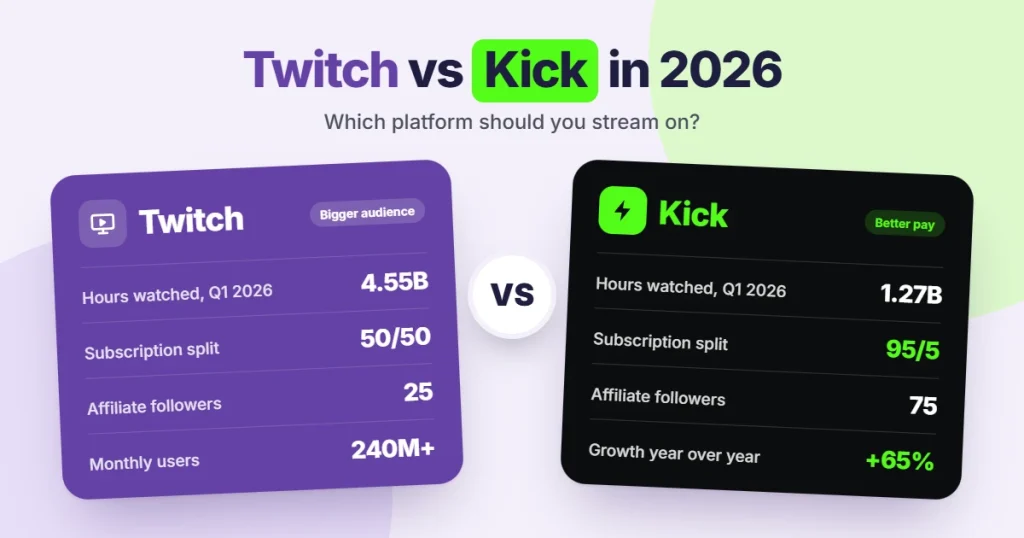
Twitch has around 240 million monthly active users and more than 30 million daily visitors, and it is still one of the biggest live streaming platforms in the world, even as YouTube and Kick keep growing. It earned an estimated $1.8 billion in revenue in 2024, according to Business of Apps.
Why does Twitch stand out from the other platforms marketers use? Live engagement is one of its greatest assets. A brand mention on Twitch does not get buried under thousands of posts in a feed. Viewers react right away, asking questions, leaving comments in the live chat and getting their questions answered on the spot. It’s impossible to achieve this kind of interaction with a pre-recorded advertisement or even an Instagram post.
Its primary audience is made up of younger viewers who are extremely hard to reach on other platforms. Most Twitch viewers are between 18 and 34, digital natives raised with online games and live streaming. Many of them use ad blockers, skip YouTube pre-rolls after 5 seconds and don’t really believe in traditional advertising. Twitch allows you to reach this audience through sponsorships.
Who Is the Twitch Audience?
Understanding the demographics is essential before committing marketing budget to any platform.
| Metric | Data |
|---|---|
| Monthly active users | Around 240 million |
| Daily visitors | More than 30 million |
| Average daily time on Twitch | About 95 minutes |
| Gender split | Around 65% male, 35% female |
| Largest age group | 18–34 years old |
| Largest country | United States |
Rounded estimates based on commonly cited Twitch statistics.
Twitch’s typical user is in their mid-20s, which shows how relevant the platform is for an audience that loves real-time, interactive entertainment.
It is important to note that around 65% of users are men. However, there has been a steady rise in the number of women using the platform, narrowing the gender gap in recent years. Women-focused brands should not overlook Twitch, especially in categories such as beauty, lifestyle and Just Chatting, which attract a much higher share of women viewers.
The most popular categories on Twitch include:
- Just Chatting – talk shows, reactions and IRL streams
- League of Legends
- Counter-Strike
- Grand Theft Auto V
- Fortnite – viewership changes a lot with each update
Just Chatting’s popularity holds real significance for brands. It shows that Twitch isn’t just an avenue for gaming; it is an avenue for entertainment and discussion. As such, it leaves room for virtually any brand, beyond the gaming or tech niche.
The 5 Twitch Marketing Strategies for Businesses
There are five main ways for a business to market on Twitch. Here is a quick overview before we go through each one:
1. Influencer Sponsorships
This is the most popular marketing format on Twitch, and often the most effective. The brand sponsors a streamer to promote its products by demonstrating, mentioning or using them during the live stream. There are several sponsorship types:
Dedicated sponsor segments
This type involves a dedicated time in the stream when the influencer mentions the product, uses it, shows it and shares promo codes. Dedicated segments usually take 2 to 5 minutes.
Integrated promotions
Here there is no dedicated time in the stream, only a natural integration of the product, for example a gaming accessory on the desk or the streamer’s drink. These sponsorships feel less like an ad and often work better.
Brand panel promotions
This involves placing the sponsor’s link to the brand’s website in the panels section below the stream. There is not much interaction between the brand and viewers.
Long-term sponsorships
This means a partnership with the influencer for one or several months, where the influencer promotes the product in their regular streams. It is the most expensive tactic, but it often gives the best results, because viewers see the brand again and again.
How to find the right influencers?
It seems logical to search among the top 50 channels on Twitch. But do not rush: mid-tier channels with a few hundred to a few thousand concurrent viewers may offer a better cost-benefit ratio. They already have devoted followers who will trust the recommendation and pay for the product.
Use influencer platforms like Upfluence or Grin to find the best candidates among numerous streamers. Also, consider their engagement: the viewer-to-chat ratio plays a key role here.
2. Display Advertising
Brands can also buy ads directly, through Twitch’s ad sales team or Amazon Ads, and reach the whole Twitch audience without working with individual creators.
Available ad formats:
- Pre-roll video ads – play before the stream starts. Highly visible, but some viewers tune out until the stream begins. They work well for building brand awareness rather than driving conversions.
- Mid-roll video ads – play during the stream, at times set by the streamer or by Twitch. More disruptive to the experience, but also more difficult to avoid.
- Stream Display Ads – shown next to the stream while it keeps playing, so viewers can still see and hear the creator.
- Display banner ads – shown around the stream and across Twitch. Less engaging, but effective for keeping your brand constantly present.
- Homepage takeovers – premium placements on the Twitch homepage. Extremely expensive and best used for major brand launches or campaign events.
How much does Twitch advertising cost?
Twitch advertising usually costs between $4 and $10 per thousand impressions (CPM), according to estimates from The Social Shepherd. During the November and December peak ad season, prices can rise to $12 or more because of higher competition among game and tech brands. Compared to other digital channels, this price range remains relatively competitive, especially when you consider how engaged the Twitch audience is.
3. Branded Events and Tournaments
This is one of the most effective forms of marketing on Twitch, and it is still underused by brands. Any branded event on Twitch creates a particular moment when the community comes together and engages. The goal here is to create clips, highlights and social media buzz beyond the actual broadcast itself.
- Tournament sponsorships – Gaming tournaments are often sponsored on Twitch and regularly get hundreds of thousands of views. To get its name in front of that many people, the brand has to be relevant to the audience. A gaming peripheral brand sponsoring an FPS tournament will resonate far better than most traditional brands.
- Branded challenges – Creating a unique challenge or competition that streamers can take part in is a great way to get user-generated content about your brand. It gives the community something to engage with, rather than a commercial inserted into their gameplay.
- Live product launches – Hosting a live product launch with a streamer as the host allows for much more interaction with the audience. This is especially useful for gaming hardware and software.
- Charity streams – Sponsoring or taking part in a charity stream usually gets a very positive response from the community.
4. Product Placement and Live Integrations
Product placement on Twitch is different from traditional media. On TV, a logo simply appears in the background. On Twitch, the creator interacts with the product live on screen.
When a streamer demonstrates your gaming chair, energy drink, hoodie or software during a stream, your product appears naturally in front of their engaged audience.
To make it effective, include the following elements:
- Authentic integration – the streamer should bring up your product naturally, as part of the conversation. Sponsored content still needs a clear disclosure, and Twitch has a branded content setting that shows viewers the stream includes a paid promotion.
- Attribution – add a unique discount code or tracking link to the stream panels or chat, so you can see whether the placement turned viewers into buyers.
5. Creating a Branded Twitch Channel
An even more ambitious plan, which can pay off over time, is setting up a branded Twitch channel. It gives the brand its own presence in the community that can grow organically.
A number of well-known brands have managed to do that. For instance, Red Bull has its own Twitch channel with athlete content, sponsored gaming events and non-commercial content, in other words things that are really entertaining to watch.
Creating a brand channel takes serious effort and time. You need a consistent content plan, good creators and a budget for promoting and growing the channel over time. Yet the result can be worth the trouble, since you get a presence on Twitch that your brand fully owns.
Plan content your audience wants
Stream what your audience actually wants to watch. Don’t create streams about your products. A tech brand should consider competitive gaming, a food brand could organize live cooking challenges, and so on. Hire a streamer or creator who can actually stream and represent your brand well.
First and foremost, think of your audience and their expectations. You don’t want your channel to look like just another advertisement.
Metrics for Measuring Twitch Marketing Success
Measurement tends to be one of the biggest concerns businesses have when considering Twitch marketing. So how can you tell if a campaign worked? The following metrics are essential:
| Metric | What it measures | How to track |
|---|---|---|
| Discount code redemptions | Direct conversions from sponsored streams | Your own analytics |
| Tracking link clicks | Traffic driven to your site | UTM parameters |
| Stream clip views | Reach beyond the live audience | Twitch analytics and social |
| Chat mentions of your brand | Organic brand discussion during the stream | Twitch chat monitoring tools |
| Follower growth during the stream | How the audience responds to the brand | Channel analytics |
| CPM vs conversion rate | Ad efficiency compared to other channels | Ad platform dashboard |
| Earned media value | Total organic reach generated | Social listening tools |
The most reliable approach combines a unique discount code (for direct conversion tracking) with UTM-tagged links and post-campaign social listening, so you capture the full picture of the earned media the campaign generated.
Twitch vs Other Marketing Platforms
How does Twitch stack up against the platforms most marketing teams are already using?
| Platform | Avg daily time | Main audience age | Ad formats | Trust level |
|---|---|---|---|---|
| Twitch | About 95 minutes | 18–34 | Live sponsorships, display | Very high (creator-led) |
| YouTube | About 40 minutes | 18–49 | Pre-roll, display, influencer | High |
| About 30 minutes | 18–44 | Stories, feed, influencer | Medium | |
| TikTok | About 50 minutes | 16–34 | In-feed, Spark Ads | Medium to high |
| X (Twitter) | About 30 minutes | 25–49 | Promoted posts, display | Low to medium |
Approximate figures. Daily time varies a lot between studies.
Twitch beats its competitors on engagement by a large distance, and the trust that creators build with their viewers is among the highest of any platform. However, there is a drawback: Twitch’s total audience is smaller than Instagram’s and YouTube’s. That is why Twitch works best as part of a wider marketing mix, not as a replacement.
Tips Before Getting Started With Twitch Marketing
- Start smallLaunch a 30-day pilot project with one or two mid-tier streamers and gather all the data on how well it works.
- Don’t script streamersDo not script streamers as if they were employees. Give them some guidance instead, and leave them creative freedom.
- Check audience quality, not just sizeA 2,000-person active audience is better than a 50,000-person passive audience of people outside your target group.
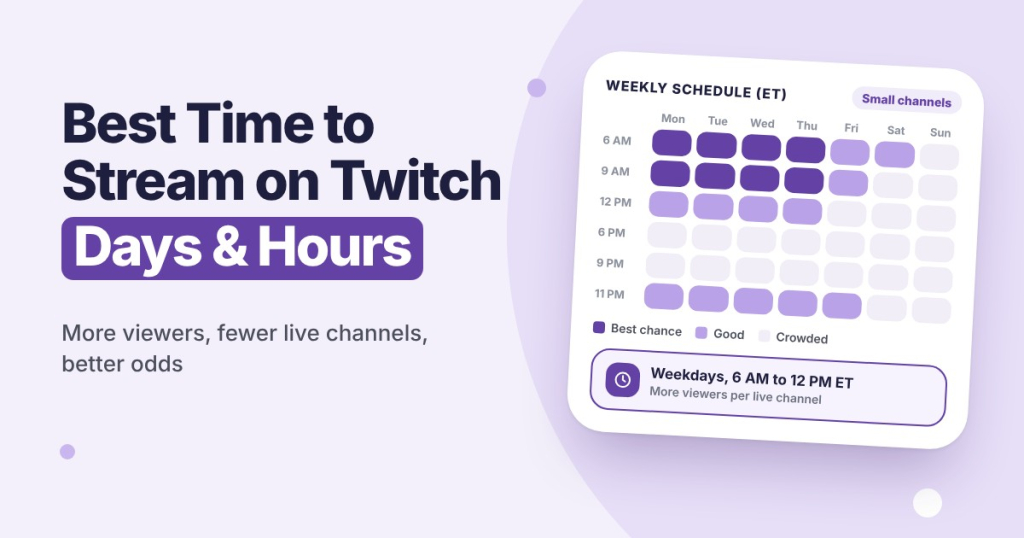
- Time it with peak viewingPlan your campaigns around Friday and Saturday evenings, major game releases or esports events, when viewership is at its peak.
- Use YouTube as wellMake sure the streamer publishes clips of your sponsored segment on YouTube after the broadcast.
If your business wants to try out streaming for itself, you can! StreamerPlus has a great guide on how to stream on Twitch for individuals and businesses.
If you’re also working on growing your own Twitch presence alongside your marketing strategy, buying real Twitch followers and viewers from StreamerPlus can help you establish the credibility that makes brand partnerships more attractive to potential sponsors.
Twitch Marketing for Businesses: FAQs
Quick answers for brands planning their first Twitch campaign.
01How much does Twitch advertising cost?
Twitch ads usually cost around $4 to $10 per thousand impressions (CPM), and prices can rise to $12 or more in the November and December peak season. Influencer sponsorships are priced separately and depend on the streamer’s audience size and engagement.
02How do I find Twitch streamers to sponsor?
Start with streamers in the categories your customers watch, then use influencer platforms like Upfluence or Grin to compare them. Look at average concurrent viewers and how active the chat is, not just follower counts. Mid-tier streamers often give the best value.
03Is Twitch good for non-gaming brands?
Yes. Just Chatting is one of the biggest categories on Twitch, and food, music, beauty, lifestyle and tech streams all have loyal audiences. Any brand that fits the interests of 18 to 34-year-olds can find a place on Twitch.
04How do you measure Twitch marketing results?
Give each streamer a unique discount code and a UTM-tagged link, then track redemptions, clicks and sales. After the campaign, add clip views, chat mentions and social listening to see the wider reach.
Drew Caldwell is a consultant, researcher and editor-in-chief of the StreamerPlus blog. His work focuses on social media, marketing and digital strategy, using data analytics to help creators understand platform algorithms and grow their audience.